
Thursday, May 26, 2011

The Tzniut Project 7: Being Attractive, Not Attracting

This is the seventh in a multi-part series called The Tzniut Project. Women from a variety of backgrounds with a variety of observances have volunteered to anonymously answer questions that I have written about their practices, people's assumptions, and more. For more information on the project, click here. Please continue to check back with The Tzniut Project to read more stories and comment abundantly!

Note: This post is contributed by a reader.


1. How do you affiliate Jewishly? Feel free to elaborate on the words people use to describe you and the words you use to describe yourself.
I would say that I am Centerist Modern Orthodox. I only wear skirts, cover my knees, elbows, and collarbone. In terms of hair coverings, I wear a combination of sheitals/falls everyday (I have 3 that I rotate). I cover my hair with a tichel when I work out at the gym, but I still wear a skirt and long sleeves there (and I definitely feel like I stand out!) I have a modest personal style blog, which some may say is not very tzanua considering I post pictures of what I wear everyday, but my goal is to show that modest dress can be fashionable and doesn't have to be frumpy or unflattering. All the time people tell me that I give a 'tznius way of dressing' a better name because I do it with my own personal style and flair.

2. Growing up, did your mother or grandmother dress modestly in any way? Do you think modesty was something instilled in you by your family? Did you dress modestly growing up?
As I am a baalas teshuva, my mother does not conform to the tradition definition of 'tznius.' That being said, I don't think I have ever seen my mother in something overtly revealing. Even though my parents live in SW Florida, my mother doesn't wear shorts, she prefers capri pants. She does wear sleeveless and short sleeve shirts, but nothing tight and the sleeveless shirts only reveal a bit of her shoulder. She likes her clothes to fit well, but not be body-hugging. My mother instilled in me the virtue of covering up to attract the right type of attention. She told me that it was important to let people see my personality first and too much of my body. I went through a period in high school where I wore halter tops and tight jeans. I was never fully comfortable with myself when I dressed like that.

3. Are you married? How does your spouse feel about your choices for modest dress? Is it a dialogue or does your partner leave the mitzvah to you?
I am happily married, Baruch Hashem! My husband likes the way I dress and leaves all modest decisions up to me. Sometimes he jokes that it would be nice if I wore lower cut tops (not cleavage baring, just lower), but then I remind him that I cover up my body out of respect for him, and I know that that is important to him. We've talked about certain aspects of tznius together, but in the end it has been my choice.

4. What would you wear on a typical day? On Shabbos? If you dress differently on weekdays and Shabbos, why do you make this distinction and how?
On a typical day I wear a high neck undershirt, some sort of nice shirt or sweater, a skirt, a fun necklace (I am really into fun accessories), and a cute pair of shoes. On Shabbos I tend to wear much fancier clothes to enhance the kedusha of Shabbos. During the week, I wear my two falls (either my hat fall with a hat or scarf, or my full fall with a bit of bangs pulled out to look more natural) and on Shabbos I tend to wear my full sheital. I will admit that I dress up more that the normal person during the week. I feel better about myself when I feel confident about the way I look. On Shabbos I dress up more than usual. I wear heels, put on more makeup, wear my nicest clothes. I feel that dressing up more for Shabbos is a big part of lichvod haShabbos.

5. What do you think other people infer from your clothing and hair covering choices? Has anyone ever said anything to you outright that expresses a judgment based on your appearance? (Ex: “You don’t cover your hair or wear skirts, so why do you keep kosher?”)
People definitely infer that I am an Orthodox Jew and that I am Shomer Mitzvos. However, I know that I stand out in certain settings because I am not afraid to wear bold colors and accessories. People ask me all the time on the streets of Manhattan where certain kosher restaurants are, where shuls are, which bus to take to certain Jewish neighborhoods/cities in NY and NJ, etc.

6. Have you ever surprised someone by dressing more or less modestly and making them rethink their stereotypes about what it means to be an observant Jew?
I know that I have surprise many people, men and women alike, because I stretch the parameters of traditional tznius. I want people to understand that being tznius doesn't mean that you have to dress in a burlap sack or wear all black. I want to show Jews and Non-Jews that tznius can be fun and fashionable and something that people want to do, rather than feel like it is a restrictive set of rules that they have to follow. I want to break boundaries and show everyone that you can have your own personal style and still be tznius!

7. When you see someone who observes tzniut differently than you, what are your initial thoughts? How do you deal with them?
I always wonder what their rationale is for dressing the way that they do. I try my best to be free of judgement, however, I will admit that I am human and therefore I know that judgement is inevitable. I am mostly curious about why people choose what they choose. For example, if a woman wears skirts all the time and short sleeves, I am curious why she does that (aside from being a bit jealous since I am always boiling in the summer months!!). Or if someone wears pants but covers their hair a certain way, I really want to know why. (Although I am aware that hair covering and tznius, while related, are very different mitzvos). It is mostly just a sense of curiousity and wanting to learn about other people's Jewish journeys and identities.

8. I say modesty or tzniut … what does that mean to you?
To me, tznius means being attractive but not attracting. Tznius means taking pride in yourself and your image enough to want to cover it up so that it is special, but also being aware that the point is not to make you feel ugly or subjugated. Tznius is a way to show off your personality to others so that they see you for you and not a pile of body parts or a huge potato sack. Its a way to highlight your best features in a demure way and feel good about yourself.

9. Anything else you’d like to add about your choices, experiences, and more!
My journey has been a long and involved one. It took years for me to get comfortable with certain decisions and there were regressions along the way. My words of wisdom is take it one day at a time. If you are trying out skirts for the first time, don't go cold turkey or give yourself an ultimatum. If you want to wear pants the next day, wear pants. If not go another day in a skirt. Just take it slowly. If you go about it with the right frame of mind, it will stick and you will come to love your choices. If you approach it the wrong way, you will feel resentment and it will be given up sooner than you think. Go at your own personal speed and listen to yourself. Only you know whats right for you in your journey of being tznius.

Wednesday, May 25, 2011

Updates, Future Dates, and Some Sad Stuff

I hope you all have been enjoying The Tzniut Project -- and from the comments I've been getting on and off the blog, I'd have to say that the preliminary answer to that is yes. On that note, I really want to do a Men's Series on the same topic, with a few added/altered questions. Any volunteers? I'd probably start it up in about two weeks, so we've got time. If you're interested, shoot me an email!

In other news, I've been out and about around the web, and I hope you'll do some reading off-site.

I wrote a piece for Lubavitch.com about my Memories of Joplin, because, well, as you'll read there, I grew up there and everything that's been happening has been insanely emotional and devastating for me. If you click here, you'll see the Google Map of the tornado's path, and if you search for my childhood address (1921 East 33rd Street), you'll see that where I grew up is in the path. So, if you haven't already, please consider donating to the relief fund. The OU has set up a Disaster Fund for Joplin.

I also have a piece up on JDate.com in honor of the soon-to-come One-Year Anniversary of being all married and stuff. The piece is from my perspective, but in case you're new around here and haven't heard the story of how we met, it might be amusing for you. Man, I can't believe it's been almost a year; it feels like just yesterday. We made it!

Stay tuned for some real and meaty posts about the reason I have been MIA aside from The Tzniut Project posts. I'll cheat and tell you where I've been: At an iCenter Fellows meeting in Oak Brook, IL. And as a further teaser, the hotel we're staying in is on Hamburger University Campus (yes, that's McDonald's) and everything here is laden with McDonald's propaganda. I feel dirty.

And sad. I just found a street-map of the skating rink I wrote about in the Lubavitch article. Keeley's. The name was Keeley's. Sigh ... 


Note: I will be in Israel from June 6-23 most likely. Will need some meals and things, and I'll be in Jerusalem for the trip. Wahoooo! Let me know if you'd like me to crash your Shabbos table.

Tuesday, May 24, 2011

The Tzniut Project 6: My Body, My Observance

This is the sixth in a multi-part series called The Tzniut Project. Women from a variety of backgrounds with a variety of observances have volunteered to anonymously answer questions that I have written about their practices, people's assumptions, and more. For more information on the project, click here. Please continue to check back with The Tzniut Project to read more stories and comment abundantly!

Note: This post is contributed by a reader.

How do you affiliate Jewishly? Feel free to elaborate on the words people use to describe you and the words you use to describe yourself.
I grew up in a secular Israeli household. When my parents embraced religious observance, they affiliated themselves (and by extension, my siblings and me) with Chabad Lubavitch. (I was 8 or 9 at the time.) Though I have an appreciation for Lubavitch, today I consider myself “modern Orthodox.”

Growing up, did your mother or grandmother dress modestly in any way? Do you think modesty was something instilled in you by your family? Did you dress modestly growing up?
Until I was 8 or 9, there weren’t any rules vis-à-vis dress and modesty. I have pictures of my mom riding a horse wearing cut-off jeans and a bathing-suit – wind blowing through her hair. When they became Chabad, almost overnight my jeans were thrown out, as were my short-sleeve to-shirts and short socks. They were replaced with long skirts, shirts with ¾-length or long sleeves and knee-high socks. The one exception was that I could wear sweat-pants as PJs. My mother, too, got rid of most of her wardrobe, replaced it all with long skirts and long sleeves. She also bought a bunch of tichels (kerchiefs) and a sheitel (wig). My grandmothers both passed away before I was born – but in pictures they are dressed modestly.

Are you married? How does your spouse feel about your choices for modest dress? Is it a dialogue or does your partner leave the mitzvah to you?
I am married – for 12 years now. When we got married, we had the conversation about hair-covering. The answer was that it would be left entirely up to me – even though he preferred that I cover my hair. But the bottom line was that it was my body and my observance. I decided to cover my hair from the start – because I know if I didn’t start covering my hair, I would likely never take on the observance down the road. The caveat is that I have incorporated more “heterim” than probably halachically permissible (i.e., I don’t cover my hair at home regardless of who is at my house, nor do I cover my hair outside when I’m on my own property). Same is true when I am at my parents’ or inlaws’ home. I always cover my hair when I’m in the real public domain (kids’ school, work, the mall, etc. etc. etc….) The other loophole is that I don’t cover all my hair (i.e., I will tie on a bandana or throw on a baseball cap – and whatever hangs out, hangs out). I do not own a sheitel – that’s not for halachic or hashkafic reasons – it’s more that the idea of having someone else’s hair on mine kind of grosses me out.

As for the rest of my dress – I don’t dress any differently now than I did before we got married. Again, my body, my observance. When the mood strikes me, I will wear jeans and short sleeves – and I will go mixed swimming. And it’s not a contentious issue in our home. Though again, I think he would prefer if I gave up jeans.

What would you wear on a typical day? On Shabbos? If you dress differently on weekdays and Shabbos, why do you make this distinction and how?
On a typical day, I dress casual to business casual. It just depends on what’s going on at work or what’s doing that evening. For Shabbos, I will only wear a nicer skirt/dress, even if I don’t go to shul and even if I’m going for a long walk. It’s to honor the spirit of the day.

What do you think other people infer from your clothing and hair covering choices? Has anyone ever said anything to you outright that expresses a judgment based on your appearance? (Ex: “You don’t cover your hair or wear skirts, so why do you keep kosher?”)
I used to get the “why do you cover your hair but wear pants” – but that combination has now become more commonplace for women in general. I don’t believe there are contradictions in observance – it doesn’t take away from someone’s observance of Shabbat or kashrut or bikkur cholim or tzedakkah or (I can keep going) just because their elbows or knees or hair are showing – and vice versa. I think you have to meet people where they are and applaud them for what they’re doing – not criticize them for what they’re not. (And if you’re comfortable and you think they’d be receptive, encourage them to explore the possibilities of doing more.)

Have you ever surprised someone by dressing more or less modestly and making them rethink their stereotypes about what it means to be an observant Jew?
I’m sure that is often the case. I work for a very liberal Jewish organization and many who I have crossed paths with have preconceived notions of what it is to be/look Orthodox.

When you see someone who observes tzniut differently than you, what are your initial thoughts? How do you deal with them?
Deal with “them” my thoughts? Or “them” the person? I guess the answer is the same: to each their own. Except for when I see small children wearing thick tights in the heat of the summer. There seems to be something incredibly unfair about that – and my feeling is that that crosses the line of what halacha requires of us.

I say modesty or tzniut … what does that mean to you?
To me, modesty implies a level of humility. Tzniut implies the halachic norms (wherever you may be) that requires a woman to dress a certain way.

Also, often when I hear the word “tzniut” I think of it as a euphemism that helps keep women invisible. And so many of these women who are rendered invisible then talk about all of their inner beauty. To me, that doesn’t feel very modest either…

Anything else you’d like to add about your choices, experiences, and more!
Here’s what I’ve learned over the years:

When I’m with more charedi/ultra-Orthodox folks, I’ve learned that people care less about what’s in my head as long as there is something on it.
Just because your sleeves reach your wrists, your hem to your ankles and your snood goes to your eyebrows, it doesn’t make you a real tzadekes.
I thought that having kids would make me reconsider my thoughts about what I wear and how I cover my hair and that I would consider a more “tzanua” style of dress. But the very acts of the labor and birthing processes have stripped away (!!!) my entire sense of personal tzniut.


Monday, May 23, 2011

The Tzniut Project 5: Women I Respect Are Doing It

This is the fifth in a multi-part series called The Tzniut Project. Women from a variety of backgrounds with a variety of observances have volunteered to anonymously answer questions that I have written about their practices, people's assumptions, and more. For more information on the project, click here. Please continue to check back with The Tzniut Project to read more stories and comment abundantly!

Note: This post is contributed by a reader.


1. How do you affiliate Jewishly? Feel free to elaborate on the words people use to describe you and the words you use to describe yourself. 
Orthodox Religious Zionist. I don't think "Modern Orthodox" really fits in Israel. Not חרד"ל. Every time I've been to shul in America, I was identified as Israeli.

2. Growing up, did your mother or grandmother dress modestly in any way? Do you think modesty was something instilled in you by your family? Did you dress modestly growing up? 
I am a convert; my family was non-affiliated from a Protestant background. My mother, who was a professional fashion seamstress, was always of the opinion that the artful conceal was more becoming than the reveal. She NEVER would have said, "If you've got it, flaunt it;" flaunting was considered tacky and low-class, worse, inappropriate for most situations. She would wear short-sleeved and sleeveless things, but never anything tight. She would wear slacks, but never jeans. As a child, I judged clothes by their appropriateness for tree climbing and did not favor skirts. In the 1960s, it was not allowed to wear pants in public school. My mother made me sets of matching bell-bottomed slacks and zip-up jumpers to wear to school, so I would not feel too restricted. In retrospect, this would be very acceptable dati-leumi [national-religious] garb today.

3. Are you married? How does your spouse feel about your choices for modest dress? Is it a dialogue or does your partner leave the mitzvah to you? 
I am married. My husband generally likes my choice of dress. We do discuss what he finds attractive and what seems appropriate modesty-wise to both of us. He really hates wigs, in principle and in appearance, so I would never wear one no matter how bored I got with my other headcoverings.

4. What would you wear on a typical day? On Shabbos? If you dress differently on weekdays and Shabbos, why do you make this distinction and how? 
I usually wear a cotton-poly shirt with 3/4 or long sleeves and a skirt. I used to wear only long skirts, but under the influence of my married daughter, I have started wearing "sharwallim" or footless tights under knee-length skirts. I cover my hair with a beret nowadays, but I have shifted from scarves to hats and back again. I usually wear my bangs out, although when I had long hair, sometimes I would wear a scarf with the end of my braid out, bangs in. For several years, I had a physically draining job in which I worked Fridays, coming home right before Shabbat. When it was just the family, I would get out of the bath and into a sweatsuit. After some persistent encouragement from my husband, I got some better-looking "sharwallim" to wear with shirts and tunics -- something in which I could collapse when the need arose. I don't work there anymore, but I still like something soft and comfortable -- if Shabbati -- for Friday nights. During the day, I'm more likely to wear a long skirt; something more dressy than my weekly outfits.

5. What do you think other people infer from your clothing and hair covering choices? Has anyone ever said anything to you outright that expresses a judgment based on your appearance? (Ex: “You don’t cover your hair or wear skirts, so why do you keep kosher?”) 
People assume I'm religious but not Haredi. People (including haredim) ask me all the time what direction in which to daven, whose kashrut "holds" in a cafeteria or restaurant, even if they don't know me. Where I live, Sefardi women I don't even know ask me what time the mikvah opens or how short they need to cut their nails.

6. Have you ever surprised someone by dressing more or less modestly and making them rethink their stereotypes about what it means to be an observant Jew? 
I think that may be one of the reasons I've started wearing pants with tunics and under skirts. More and more women I respect are doing it, it looks good on me, and I feel covered up. I don't climb trees much anymore, but I like to be free to do some spontaneous yoga stretches in private. Also, I find I rather like stating in my dress that I am not haredi.

7. When you see someone who observes tzniut differently than you, what are your initial thoughts? How do you deal with them? 
Over the years, I have become much less judgemental regarding religious women in slacks (without skirts), not covering their hair, or wearing only a haircovering that is largely symbolic. I think that this is a healthy sign, young religious women who probably would not otherwise cover their hair, doing it as a sign of identifying as a married religious woman. It is offputting to me when women and girls who dress more "to the right" do so in ways that are dowdy. It really bugs me when they wear calf-length skirts and sit so that I can see their half-hose underneath. I was raised to think that showing your half-hose was tacky. ("Half-hose for half-wits,"as my sister used to say.) Why make a fuss about wearing socks under your skirt if you're only going to be tacky about it? Knee socks don't bother me that way. I've seen a lot of ladies with the "shalim" and a few Jewish burkha ladies, and it annoys me. A very attention-getting way of declaring your tzniut.

8. I say modesty or tzniut … what does that mean to you? 
Not drawing attention by being flashy or too declarative. Not dressing to offend or to be a public spectacle. Keeping my body private.

9. Anything else you’d like to add about your choices, experiences, and more! 
I started coloring my graying hair because I met several hijab-wearing Moslem ladies who kept their hair stylishly cut, with highlights. There seemed to be something seriously wrong with looking gray and shaggy for my husband and family, but well-groomed for everybody else. I have also been asked by Moslem women how exactly I tied my scarves.

Sunday, May 22, 2011

The Tzniut Project 4: Wanting to Feel Elegant

This is the fourth in a multi-part series called The Tzniut Project. Women from a variety of backgrounds with a variety of observances have volunteered to anonymously answer questions that I have written about their practices, people's assumptions, and more. For more information on the project, click here. Please continue to check back with The Tzniut Project to read more stories and comment abundantly!

Note: This post is contributed by a reader.!


1. How do you affiliate Jewishly? Feel free to elaborate on the words people use to describe you and the words you use to describe yourself.
I would say I affiliate Conservadox, meaning I use halacha to govern my life but also am very liberal and see Judaism in a egalitarian way. I see the beauty and importance of women in Judaism and it is separate from the way that men experience it but not lesser. In high school my friends called me "Super Jew" but I think it was because I just loved Judaism so much, and they weren't very observant, and I was. They saw Shabbos as a task or obligation and I saw it as beautiful and spiritual.

2. Growing up, did your mother or grandmother dress modestly in any way? Do you think modesty was something instilled in you by your family? Did you dress modestly growing up? 
Not at all, I mean my mother dresssed and still dresses with the times: short skirts, cleavage, pants, but she doesn't dress like a hooker or anything. Another factor was that I was raised Catholic.

3. Are you married? How does your spouse feel about your choices for modest dress? Is it a dialogue or does your partner leave the mitzvah to you? 
I am married very very happily. My husband being basically atheist looks at me like I'm silly when I am concerned about my modesty, but when I explain it to him I think he is pretty appreciative.

4. What would you wear on a typical day? On Shabbos? If you dress differently on weekdays and Shabbos, why do you make this distinction and how?
A typical day is jeans and a T-shirt , or tank and sweater, or skirt and T-shirt or tank and sweater. Shabbos is a nice skirt and blouse or dress, I dont feel like pants are appropriate on Shabbos. I want to feel elegant and beautiful to honor Shabbos.

5. What do you think other people infer from your clothing and hair covering choices? Has anyone ever said anything to you outright that expresses a judgment based on your appearance? (Ex: “You don’t cover your hair or wear skirts, so why do you keep kosher?”)
I really have no idea what people might infer from the way I dress and my hair covering choice (which is tichel 98 percent of the time). Maybe that I'm Muslim because I have a fairly tan complexion as I am half Puertorican and half Mexican? Maybe that I'm some sort of hippie chick? Not really sure. In high school when I started experimenting with observance I felt that some people might have had the opinion that I was not genuine because of my being a convert, like maybe I was trying to show that I was Jewish, and it was just a show. But I haven't ever had any outright comments.

6. Have you ever surprised someone by dressing more or less modestly and making them rethink their stereotypes about what it means to be an observant Jew?
I'm not sure; maybe. I live in a place where there are not very many Jews, and the fact that I am a Jew probably is unknown.

7. When you see someone who observes tzniut differently than you, what are your initial thoughts? How do you deal with them?
Honestly I think NEAT. If they are more strict then I am I think about how they do it, why they do it, and what it means to them to do it. If they are less [strict] I think pretty much the same thing, and if they are doing something particularly pretty how I can replicate it.

8. I say modesty or tzniut … what does that mean to you? 
Respect. Respect for myself and husband. Keeping myself special for our marriage and our marriage alone. Also, making it easier to live in modern society not having to worry about men ogling me and my goodies just makes me more comfortable.

9. Anything else you’d like to add about your choices, experiences, and more! 
My choices in observance, especially of tzniut, have been an ongoing process, learning what I am comfortable with and adding and or subtracting. Figuring out how to deal in the work place and around family. My experience has been that modesty is awesome, and I hope to teach my daughter that.

Friday, May 20, 2011

What is Good Israel Education?

Usually, when one crowdsources something, it's on Facebook or Twitter because answers are quick, immediate, short and to the point. But I thought I'd give it a go here. For those who have zero clue what I mean when I say crowdsource, here's the quick gist.
Crowdsourcing is a neologistic compound of Crowd and Outsourcing for the act of taking tasks traditionally performed by an employee or contractor, and outsourcing them to a group of people or community, through an "open call" to a large group of people (a crowd) asking for contributions.
So here's the question I have to ask:

What is Good Israel Education?

Feel free to interpret the question at your discretion. But your answers will be put to use. Ready? Go!

The Urge to Reach Out

So, I was at a store today picking up something I'd ordered online (a straight jean skirt that actually fits, yay DKNY!). The girl checking me out was awkward, but friendly. My Jew-dar failed me on this one, but I'll admit that my gay-dar is better than my Jew-dar.

I handed her my card to pay.

Clerk: How do you pronounce your name?
Me: Chaviva (emphasis on that chet, you know)
Clerk: Is that a Jewish name?
Me: Yup. It's Hebrew!
Clerk: Oh, neat. I'm Jewish, too.
Me: Ahh, nice.
Clerk: My Hebrew name is Sarah Rochel (yes, Rochel, not Rachel).
Me: That's a very traditional Hebrew name.
Clerk: Are you from Israel?
Me: Nope. My American name is Amanda, but I switched it to Chaviva, my Hebrew name, because they mean the same thing. I really identify with my Hebrew name.
Clerk: Oh.
Me: What's your English name?
Clerk: (smiling) Ashley
Me: (smile back)
Clerk: I've never been to Israel. I want to go.
Me: I'm going in two weeks! It will be my fourth trip. I think everyone should go once, no matter their religion. There's a lot of history there.
Clerk: Well, have a good trip.

As I walked away from the clerk, I had this urge to turn around and hand her my business card. I walked almost hesitatingly out of the store. I got in my car and thought to myself, This must be what Lubavitchers feel when they meet Jews and do the opposite of what I did, and act. 

Would it have been weird for me to give her my card? I sort of got the impression this girl was reaching out. She didn't appear to be observant, but she seemed to have this urgency in her voice. Should I have asked her if she's considered going on Birthright? She was probably in her mid-20s. I feel like I did her, and the Jewish people, a disservice by not doing or saying something.

What was I supposed to do? I don't know. But I felt this urge to reach out and light a fire in her neshama.

Thursday, May 19, 2011

The Tzniut Project 3: Feeling Good in One's Own Skin

This is the third in a multi-part series called The Tzniut Project. Women from a variety of backgrounds with a variety of observances have volunteered to anonymously answer questions that I have written about their practices, people's assumptions, and more. For more information on the project, click here. Please continue to check back with The Tzniut Project to read more stories and comment abundantly!

Note: This post is contributed by a reader, but I couldn't help but add a comment or two!


1. How do you affiliate Jewishly? Feel free to elaborate on the words people use to describe you and the words you use to describe yourself.
I grew up Reform, but am now leaning more toward traditional egalitarian. The minyan with which I attend services isn't affiliated with any denomination, and the people in the community range from Modern Orthodox to barely observant. I'm still working on becoming more observant ... it's a process. My immediate goal is to make being shomer Shabbat a priority and keeping hekhsher kosher at home.

2. Growing up, did your mother or grandmother dress modestly in any way? Do you think modesty was something instilled in you by your family? Did you dress modestly growing up? 
It wasn't really something anyone talked about. We all dressed fairly modestly by secular standards, but I wore tank tops and shorts as a kid when it was really hot. I always preferred the look and feel of long skirts, though.

3. Are you married? How does your spouse feel about your choices for modest dress? Is it a dialogue or does your partner leave the mitzvah to you? 
I'm not married, so I'm beholden to no one but myself. (Although if I did have a partner, I would hope they'd understand that modesty is a personal thing.) I think I might want to cover my hair if/when I get married. My family would be shocked, though.

4. What would you wear on a typical day? On Shabbos? If you dress differently on weekdays and Shabbos, why do you make this distinction and how? 
On an ordinary day, I'd wear a knee-length skirt or dress, knee socks if it's cold. I like my sleeves to be elbow-length or longer, though if it's really hot I'd wear a short-sleeved shirt. On Shabbat, it really depends. To services, I like to look nice and about the same level of covering. I'd definitely wear clean, nice clothes. I feel like it's disrespectful if I'm just schlepping around on Shabbos.

5. What do you think other people infer from your clothing and hair covering choices? Has anyone ever said anything to you outright that expresses a judgment based on your appearance? (Ex: “You don’t cover your hair or wear skirts, so why do you keep kosher?”)
Most of my very close friends aren't Jewish, let alone observant (though I do have plenty of Jewish friends who are), so they don't notice or care about anything related to tzniut. In my Jewish community, people are at all different levels and modes of observance, so no one asks any questions. Although I cover about the same as a Modern Orthodox Jew might, my general "look" doesn't really evoke Judaism as such. (I have a nose ring and very short, spiky hair.) Chavi's Note: So jealous. I've pondered a nose ring, and I often miss my short, spiky hair ... le sigh.

6. Have you ever surprised someone by dressing more or less modestly and making them rethink their stereotypes about what it means to be an observant Jew?
Once I went to a childhood friend's wedding (she's Chabad) and although I covered plenty (3/4-length shirt, ankle length skirt) I stuck out like a sore thumb. Yet everyone knew I was a Jew, just not observant like them. I don't really know what they though about me, though.

7. When you see someone who observes tzniut differently than you, what are your initial thoughts? How do you deal with them?
I know so many different kinds of Jews, so I know everyone has a different way of approaching modesty and other observances. That said, sometimes when I'm having a bad day, I judge people based on what they're wearing, if they show a ton of skin or whatever. I try not to, but sometimes I do.

8. I say modesty or tzniut … what does that mean to you?
Feeling good in one's own skin, honoring one's body because G-d made it, and treating yourself well. Dressing so that I'm not too body-conscious, but so that I still look and feel good.

9. Anything else you’d like to add about your choices, experiences, and more!
I read your piece on the hijab, and I just wanted to commiserate! Where I live, there's a huge Muslim population, and I see so many women at my university with these elegant hijabified outfits and I envy them. I wish we Jews could do something similar ... Chavi's Note: Amen. Here's the post to which the author/contributor refers.

Tzniut is not the most crucial part of my journey toward observance. It's important to me, but isn't difficult. A much greater struggle for me is keeping kosher and being shomer Shabbat. It's all a process; I try to remember that.

Wednesday, May 18, 2011

The Tzniut Project 2: Making Snap Judgments

This is the second in a multi-part series called The Tzniut Project. Women from a variety of backgrounds with a variety of observances have volunteered to anonymously answer questions that I have written about their practices, people's assumptions, and more. For more information on the project, click here. Please continue to check back with The Tzniut Project to read more stories and comment abundantly!

Note: This post is contributed by a reader.


1. How do you affiliate Jewishly? Feel free to elaborate on the words people use to describe you and the words you use to describe yourself. 
Hard to put myself into a box. I guess people would call me yeshivish/frum/maybe even black hatter. But I think I am more of an MO [modern orthodox] orthofoxalicious chick, who borrows from right wing and left wing traditions ... to a certain extent.

2. Growing up, did your mother or grandmother dress modestly in any way? Do you think modesty was something instilled in you by your family? Did you dress modestly growing up? 
Growing up the women in my family wore pants, sleeveless shirts, shorts and didn't cover their heads. But there was a line you didn't cross. No micro-minis, no deep cleavage. I think it was instilled in me as a matter of self respect more than "modesty." Trashy girls wore miniskirts, not good girls.

3. Are you married? How does your spouse feel about your choices for modest dress? Is it a dialogue or does your partner leave the mitzvah to you?
It's very interesting. My husband couldn't care less if I covered my hair or not, but if I show my collarbone he's uncomfortable. Most of the time he says nothing because the argument isn't worth it.

4. What would you wear on a typical day? On Shabbos? If you dress differently on weekdays and Shabbos, why do you make this distinction and how? 
During the week I am in my denim skirts and T-shirts, on Shabbat I dress fancier -- out of respect for the holy day. If I go to shul I won't go bare-legged, but if I stay home I won't don panty hose.

5. What do you think other people infer from your clothing and hair covering choices? Has anyone ever said anything to you outright that expresses a judgment based on your appearance? (Ex: “You don’t cover your hair or wear skirts, so why do you keep kosher?”) 
I think when people see me they expect me to act a certain way -- not make a spectacle. They associate the wig and the modest dress with knowing how to behave in public. That being said, people do assume a certain way of thinking goes with the dress -- and I am somewhat of a feminist and that surprises people. Apparently if I wear a sheitel I am supposed to agree with everything my husband tells me, and do what I am told. The fact that I think for myself surprises those Jews who are much less observant.

6. Have you ever surprised someone by dressing more or less modestly and making them rethink their stereotypes about what it means to be an observant Jew? 
In the summer i tend to dress less modestly -- shorter sleeves, bare legs -- and there have been comments about being hypocritical.

7. When you see someone who observes tzniut differently than you, what are your initial thoughts? How do you deal with them? 
Honestly, Chaviva, this is a huge challenge for me. I judge. I see what I see, and I make snap judgments. This woman could be dressed the same way as I am, but I might look down on her for her bare legs, or hair showing under her bandanna. I might be envious of the trousers or the sleevless shirt, but there is always an initial feeling of superiority rearing its ugly head. I fight this daily.

8. I say modesty or tzniut … what does that mean to you? 
To me it's as much about behaving in an appropriate manner as it is about dressing modestly.

9. Anything else you’d like to add about your choices, experiences, and more!
[n/a]

Tuesday, May 17, 2011

The Tzniut Project 1: Knowing the Social Norm

This is the first in a multi-part series called The Tzniut Project. Women from a variety of backgrounds with a variety of observances have volunteered to anonymously answer questions that I have written about their practices, people's assumptions, and more. For more information on the project, click here. Please continue to check back with The Tzniut Project to read more stories and comment abundantly!

Note: This post is contributed by a reader


1. How do you affiliate Jewishly? Feel free to elaborate on the words people use to describe you and the words you use to describe yourself.
Modern orthodox. Modern in the sense that I live in the secular world, work in a "white collar" job, and interact with men on a daily basis. Orthodox in the sense that I care what halacha has to say, and that I try to go by halacha in everything I do (even if sometimes I pick and choose at my psakim).

2. Growing up, did your mother or grandmother dress modestly in any way? Do you think modesty was something instilled in you by your family? Did you dress modestly growing up?
My broader family dressed modestly and are very religious. My grandmother and aunts always wore skirts and sleeves, and one of my aunts also covered her hair. My mother dressed modestly in order to make sure that her family and her surroundings did not think badly of her and did not gossip about her, not necessarily because she believed in it. In fact, I think if she had the choice to she would have left a lot of the modest clothing by the wayside. I went to an orthodox girls' school and was required to wear skirts that covered the knees at all times, with no slits, shirts with sleeves till the elbows, and to always have my toes covered. I dressed modestly, most of the time according to school guidelines, even though there were some guidelines that I did not agree with or see the point of.

3. Are you married? How does your spouse feel about your choices for modest dress? Is it a dialogue or does your partner leave the mitzvah to you?
I am married. Before we got married, my husband and I learned together some of the various halachot relating to tzniut, particularly those pertaining to hair covering and discussed what we both felt comfortable with. Since then, the decisions on tzniut have been left to me, with my husband having the right to veto what I am wearing if he thinks it is too exposed, or if we are going to meet his family or friends and he would feel uncomfortable if I wore certain outfits in that company.

4. What would you wear on a typical day? On Shabbos? If you dress differently on weekdays and Shabbos, why do you make this distinction and how?
Typical day: Pants and T-shirt, or long skirt and T-shirt. T-shirt always has sleeves, but not necessarily down to my elbows or past them. Pants or skirt always get to knees and cover them when I am standing. I make sure that my shirts aren't low enough to show cleavage, and I try to make sure that this is kept also when I am bending and such, but that is not always the case. This is an issue that my husband comments on most frequently of all these types of issues. On Shabbat I always wear a skirt or dress, and a more elegant shirt. My hair is always covered, typically with a tichel or beret of sorts, and my bangs and/or ponytail sticking out. I don't allow my hair to get too long out of the head covering because then I feel it misses the purpose, but I most certainly do not cover every possible millimeter of it. I do not wear pants on Shabbat, because I feel they are inappropriate for shul, though I do consider them modest, and I feel I look more elegant in skirts and dresses and like to honor shabbat by looking more elegant.

5. What do you think other people infer from your clothing and hair covering choices? Has anyone ever said anything to you outright that expresses a judgment based on your appearance? (Ex: “You don’t cover your hair or wear skirts, so why do you keep kosher?”)
In Israel, people infer that I am religious Zionist, but as they say, not TOOO religious, since I wear pants. Someone once asked me, in a very inappropriate manner, "If you were pregnant and knew there was a problem with the baby, you would abort it no problem, right?" When I asked what made them say that they responded "Well, you wear pants and such so I figured you wouldn't ask rabbis about issues that are very personal and would affect your life, and about which halacha is very archaic. You would probably do what you want and only ask a rabbi when you thought you would hear the answer you want..."

In the states, people have a difficulty with the pants and head covering concept. I was once asked to bring a snack to my son's preschool (a kosher school) and was taken aside by one of the teachers to make sure I knew that the snack must have a Chaf-K or OU symbol on it. When I told her that of course I know this, after all I am frum and cover my hair, she said to me: "You wear pants and go to THAT shul, I wasn't sure if you were just covering your hair to respect the school or you are really frum." So yeah, people have definitely judged me based on my appearance.

6. Have you ever surprised someone by dressing more or less modestly and making them rethink their stereotypes about what it means to be an observant Jew?
Yes, as in both stories above. People were surprised to hear that halacha was important to me even though I wear pants and some of my hair sticks out of my tichel. I guess people think that if you don't go by the strictest halachic opinion, that means you are just doing what you feel like, and don't base your actions on halachic heterim, or permissions, given my other reliable rabbis.

7. When you see someone who observes tzniut differently than you, what are your initial thoughts? How do you deal with them?
I often wonder what psak they used to decide how they would dress, and if they are dressing that way because of knowledge of the various halachic opinions and a conscious decision to follow that halachic way, or they are being driven by the surrounding society and its expectations, or by what they feel is right without consulting any rabbinic authorities and/or without regard to such authorities.

8. I say modesty or tzniut … what does that mean to you?
Being dressed in a way that does not draw attention to you. This includes being covered in all the right places, but also other things such as not wearing shirts or dresses with strategically placed prints which draw attention to specific body parts and not wearing things that are too glitzy or glamorous, and would draw attention even though they are modest in length and what they cover. Also, after talking to several men who made it very clear to me that they cannot distinguish a sheitel from a woman's hair, and after seeing some sheitels that look ABSOLUTELY AMAZING, and realizing that you would never have a bad-hair-day in a sheitel, I also choose for it to be my modesty not to wear a sheitel but to wear something on my head that people can clearly identify as a covering and not mistake it for my hair.

That being said, I do see the usefulness in sheitels in situations where your work would not accept a tichel or hat, such as when a lawyer represents people in court. If I were ever to be in such a situation, I would of course opt for covering my hair using a sheitel rather than ignoring my belief that married women should show that they are married by covering their hair.

9. Anything else you’d like to add about your choices, experiences, and more!
To me, modesty is very much influenced by its social context. Not all of it of course, things like not wearing mini skirts or having very low neck lines seem pretty obvious and undebatable to me, particularly knowing what this does to men ... However, I feel that things like covering hair and sleeve length very much depend on a social context. Unless they live in Williamsburg or Meah Shearim, all men today see women with their hair uncovered on a daily basis, with this having no affect on their attraction to such women. Therefore, I don't think that women who do not cover their hair are doing so particularly to attract or seduce men, or that they are immodest in the fact that they do not cover their hair. On the other hand, social context should be used not only to allow ourselves to be more lenient in our interpretation of tzniut, but also, when necessary, to be more stringent in such interpretation. For example, just like no self-respecting woman would walk into a lawyer's office in a bikini and expect to be taken seriously, in social context where more stringent tzniut guidelines are expected, such as when visiting ultra-orthodox neighborhoods or yeshivas, I would expect women to dress according to the social norm in the place they are visiting, even if that is not how they would dress on a day to day basis.

Saving a Sefer Torah

Many, many months ago, my dear husband was tasked with organizing the home of a relative, and in the process he has found some true treasures. I've blogged some of the photos before, but I can't help but post them again because I, myself, am shocked that we have this.

The only surviving family photo of the Berkowitz family.
The three oldest (on the far left, middle, and far right)  were the only to survive.
Two of the sisters married two of the Katz brothers, pictured below.
That being said, we were told by this relative whose house Tuvia is organizing that there was a Sefer Torah somewhere in the house. Now, Tuvia had no prior knowledge of such an item in the family and neither did anyone else. Tuvia made sure to look for the Sefer Torah, and even checked with the local synagogues to see if it had been donated back in the 1960s as we'd been told it might have been. Eventually, Tuvia gave up and assumed the Sefer was gone, never to be seen again -- after all, it hadn't been seen in probably 30 or 40 years. And then? He found it! Out of the blue, there it was, rolled up safely in a carpet.

Okay, hold on, you're probably asking yourself: Why on earth does Tuvia's family have a Sefer Torah hanging out somewhere in their house?

Where's the etz chayim!?
Well, legend has it (seriously) that when the Wilkes-Barre, Pennsylvania, community's four synagogues combined forces as the community shrank, the Sifrei Torah were dished out to members of the community who had donated money toward the original writing/purchase of the scrolls. The person in charge of the disbursement was my husband's grandfather's step-father, so -- knowing that the family had given toward the scroll -- handed the Sefer Torah over to the family.

Thus, there's a family Sefer Torah, and this is where you come in. We took the sefer to a sofer (scribe) to give it a once over and let us know what kind of shape it was in and what it would take to fix it. Yes, we noticed right away that one of the etz chayims was missing (that's the wooden thing that the parchment is rolled on), but the parchment looked like it was in pretty good condition. But these things aren't cheap, folks.

The sofer aged the Sefer Torah to at least 70-80 years, and he said that it's in pretty good condition for being so old. (Of course, my first thought was: I wonder if this came from Europe pre-Shoah?) The klaf (parchment) has some fraying and small tears, but nothing too severe. It is written in Ksav Bait Yosef, which is the Ashkenazi form of lettering. Oddly enough, one section of the sefer -- from Parshat Ekev through Ki Setzei -- was written by a different sofer, meaning that perhaps the section was damaged and needed to be written.

The Sefer Torah goes for a ride ... to the sofer!

Despite it being in good shape, there's been a lot of fading in Sefer Bamidbar and Devarim, and that with a complete refurbishing, we'll be good to go with a beautiful Sefer Torah! There also is a lot of wonky things going on with many of the letters like the yod (י), hey (ה), chet (ח), and tet (ט), which means that the refurbishing will cost anywhere between $1,500 to $3,400 (depending on if we go machmir and get the letters fixed). Yikes.

The Katz Family, probably from the 1930s. The man in the hat, Fred Katz, Tuvia's great grandfather,
we believe, is who gave money toward the purchase or writing of the scroll.
As the sofer said, "The mitzvah of actually writing a Sefer Torah is one that does not come around very often. Consider this a great zechus and a perfect opportunity to fulfill it in a most Mehudar way."

Translated: To take part in fixing up a Sefer Torah is a great virtue and fulfills a mitzvah in a most enhanced way! And this is where you guys come in. The sefer recommends doing the minimum fixing of $1,500 plus fixing the yod ("The letter י is missing the 'kotz' in the majority of instances. According to the vast majority of poskim, this renders the Torah possul, and must be repaired") for $600.

So help us save this Torah. Our plan is to loan the Sefer Torah to an organization or synagogue that needs a Torah use it, but for the Sefer Torah to remain in the family for use at b'nai mitzvah. (If you know of an organization that needs a sefer, please let us know!)

Will you help us in this mitzvah?

To help us in this mitzvah, click on the DONATE button on the top right of my homepage. We are trying to raise at least $2,100 by the High Holidays! I will be compiling a list of those who donate, and we hope to somehow acknowledge the donors upon the completion of the Sefer Torah's renovations by Rosh HaShanah!

Monday, May 16, 2011

The Tzniut Project

After hitting up several stores today for what I thought was called a "pencil skirt," I was corrected by some of my Twitter friends and realized what I really was looking for was a "straight skirt." All I know is that the straight skirts I have I have outgrown (even though I haven't lost weight) and they sag on me in weird areas (maybe I bought them thinking I was bigger than I was?). I love them, and I got them super cheap from Lands End, but I haven't had luck finding anything else like them. I suppose I could always get them tailored, but, wel, that costs money. (I know; I should learn how to use a sewing machine.)

Ahh to be a modestly dressed woman in search of light, summer-appropriate, tzniut skirts that won't break the bank and will withstand the hot temperatures of the U.S. and Israel. Woe, oh woe is me.

I posted something to Facebook a few days ago, and I received a surprising amount of emails and Facebook messages from women hoping to participate, so I'm stoked about what one responder called The Tzniut Project. What's this mean? I want to start a series of Q&A posts with Jewish women who observe tzniut (modesty) and the stereotypes they face, the experiences they have, and everything about what it means to dress one way and have people perceive you in their own way. You know, the classic frum (observant) woman who wears pants and short sleeves and doesn't cover her hair but would kill her kid for flipping the TV on on Shabbos or eating anything that bears a Triangle-K hechsher. We all have our preconceived notions about the way people dress and how it reflects who they are spiritually or religiously, and I want to start a dialogue about it. (This also plays to a post I wrote last week that got some questioning replies.)

Are you interested in participating? Shoot me an email and the questions will be on their way. There are about 10 questions and you can take your time answering them. This is going to be an ongoing series, and I will be doing minimal editing (only for my OCD grammar concerns) -- and most importantly, all posts will remain anonymous.

For all the posts, click here!

Shamelessly in Love With Sabra Hummus

I assumed it was obvious, but people seem to want me to say flat out that this trip was paid for by Sabra. So there you have it: they flew me down, they paid for my hotel, and they paid for my food. As part of the Tastemakers Panel, I agreed to blog about the trip, to develop hummus-based recipes, and more. So deal with it.

Close your eyes. Imagine taking a bath in garlic. Imagine the smell of spices swirling around you. Imagine feeling the entire Mediterranean world having a gigantic party in your nose, dancing on your tastebuds.

Open your eyes. And? You're standing in the Sabra hummus factory in Chesterfield County, Va! Okay, so you aren't standing there, but you're standing there, vicariously, through me.

The final group that attended was Liz, Diane, Linda, Kristin, and Renee!
As a member of the 2011 Sabra Tastemakers Panel, I schlepped with five other ladies from the group to an amazing (non-kosher, unfortunately) restaurant called Acacia last Tuesday, stayed in an amazing room at a Residence Inn (where I stayed up until 2 a.m. watching חיים יקרים, even though I had to wake up at 7 something a.m.), and took a tour of culinary delights. The goal of the trip? To give some bloggers a behind-the-scenes view of the factory, a chance to taste brand new products, to meet the Sabra chefs, and to ask the tough questions (exactly how many chickpeas are used each day? Top Secret!).

It's kind of like we're famous.

Knowing that I was the only member of the panel with a kosher bent, I viewed everything through the lens of kashrut, which made the entire experience interesting. Food was catered to the hotel Tuesday night for myself and one of the group leaders and to the Sabra Factory for Wednesday lunch and dinner to take to the airport. I ended up eating the delicious meal Tuesday before we went out to dinner, because I didn't want to face the awkward experience of the kosher Jew drinking only water and starving while everyone else ate. The waiter attempted to understand our dietary concerns ("That just means no pork, right?"), and even though he was from LA, he was pretty clueless. Luckily, with the powers of the bartendress and our waiter combined, I had a delicious alcoholic beverage that got me through the evening! The restaurant's set-up was beautiful, with an "open kitchen" that sort of creates a trusting sense of transparency.

Say hello to MaryDawn!
On Wednesday, with coffee in hand, we took off to the Sabra Factory, which was sort of out in the middle of nowhere on a beautiful Silver LEED Certified facility. What does this mean? Well, the facility is made with 20 percent recyclable materials, and they use the collected rainwater in the building for cooling -- they really don't waste, but they do reuse and recycle (did you know the hummus lid and bowl are recyclable?!). We spent most of the day being followed around by a great two-man film crew, and our fearless leader was Mike S., the head of Research and Development for Sabra, and Executive Research Chef MaryDawn also accompanied us along the journey.

After putting on a less-than-stylish outfit that included a factory jacket, a hairnet, some goggles, and a hardhat, we took off to the factory floor. Lucky for me, because I have glasses, I got to skip the goggle things, but I did find that wearing a tichel with a hairnet with a hardhat was, well, less than comfortable. I did notice there was one woman -- who I assumed was Muslim -- in the spice room wearing a head scarf with the hardhat, so I felt a sense of sisterhood!

The first step into official factory space was, of course, the garlic. The aroma of spices. Then? The 1 ton bags of chickpeas! They're kept in super bags, 2,000 pounds apiece! We snaked through hydration and washing stations, the garnish (you know, those pine nuts on top of the hummus) room, and got to watch live-action hummus making, and we even got to try the first-run goods off the line, before they get spiced, blended, and packaged. The color was very yellow and the texture much chunkier than the final product. We walked through the packaging area, watching how they transport the garnishes and hummus from place to place in these gigantic metal pods. After the factory, we went to the test kitchen area, where there were some fresh goods to sample (alas, believe it or not, the Sabra kitchen isn't kosher, even though the products are). Luckily, they busted out the two newest flavors of hummus fresh from the package, and we got to sample them: Buffalo Style and Basil Pesto hummus.

I didn't partake, but I plan on replicating the hummus-meets-eggplant heated-up recipe at home!


Now, I was really stoked about the prospect of Buffalo Style Hummus complete with celery and the taste of buffalo with ranch (even though it's parve), but I'll admit, it was the Basil Pesto Hummus that took my breathe away. I have hated pesto for as long as I can remember, but this new product from Sabra has me hooked. I want to put it in meatballs, and melt it on pasta, and ... you get the drift.


The other real winners of the trip were the new Greek Yogurt dips that Sabra has started producing. I honestly couldn't stop eating the Spinach and Artichoke dip. I figured that I could sit down and eat the entire container and not completely destroy my eating schedule -- it's that good for you (or, rather, not bad for you). These dips are dairy, and they have traditional hashgacha, but also are marked Chalav Stam, in case you're concerned. I really applaud Sabra for using Greek Yogurt in their dips, because they're the only ones out there making dips that are not based on sour cream. Bravo for a health-conscious company.

After testing out the new hummus flavors and the new dairy dips, we sampled the four new salsa flavors, as well as the two new guacamole flavors (I didn't partake, because, well, I've always hated guac!). The salsa has me beyond excited. It tasted fresh and traditional (as in, the kind of Mexican I'd get at the small mom-and-pop places run by people who spoke no English), and I can't wait to see the gigantic tubs of this stuff at the Big Box retailers!


Our kind hosts prepared some delicious nosh for the non-kosher keepers, including an amazing dessert that I can't wait to replicate once the recipe comes my way, and if you're lucky, I'll be sharing it with you, too! The recipe makes for "Chocolate Hummus." With coconut. And it looked amazing. If only I could have tried it! Agh. And I also got to meet -- but held back my excitement -- Colombe Jacobsen, whom you might remember as "The Cat" from the Mighty Ducks movies! Color me star-struck. She's one of the Sabra chefs, believe it or not.

The day ended with some outstanding schwag and a van ride to the airport, where we issued our goodbyes and went on our way. It was a whirlwind 24 hours, but it was totally worth the trip and time. Why? Well, I learned some interesting things.
  • Pumping hummus through pipes compromises its texture, so the factory uses gravity to its advantage, dropping the hummus from one layer of the factory to another!
  • Sabra Hummus is now officially gluten free!
  • Sabra has removed every preservative from its hummus except for one, which is considered standard in the industry, but the plan is to get rid of even that in the future! The folks at Sabra are very devoted to healthy, sensible choices.
  • Hummus isn't just for dipping. No, it's for cooking. The best example? Well, that delicious coconut dish up there: Toasted Coconut Topped Chocolate Hummus Cups! (Check out recipes here.)
  • The factory in Virginia produces only hummus, and it peaked at 60 tons of hummus in one 8-hour shift! Holy wow!
  • The Virginia location broke ground in 2009 and already has outgrown its breeches! That's how quickly they're growing, everyone.
  • By volume, the U.S. consumes more hummus than Israel, even though more households in Israel (by a huge margin) purchase the product. In the U.S., Sabra holds 10 percent of the hummus market, which is up from 7 percent at the beginning of 2010.
  • In a word: Sabra Hummus is growing. Are you on the Hummus Train?
The entire experience was enlightening. I've been on factory tours before, but only the beer and tea variety back in Colorado. Sabra opened their world to us, and I feel a greater connection to the hummus that we consume every Friday and Saturday for Shabbos. Now, my goal is to get these new products into all of the grocery stores in Teaneck -- come on! I've got the bug, I want my dip and hummus!

Also, stay tuned for more blog posts about Sabra, my trip, and, of course, giveaways. I have some schwag to pass along to one lucky reader. Could it be you? That depends. Until next time ...

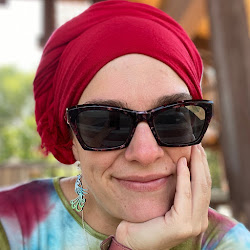
Good lord my hair is long.


The Shabbos Menu


I haven't posted a Shabbos menu in a while, but I was particularly pleased with the outcome of this past weekend's nosh. The variety of cookbooks used, too, I think will boggle your mind. Are you ready?

We had guests over on Saturday, so most of my oomph was focused on Saturday, so we'll start there. The menu:
Challah
Mexican Salad from Quick and Kosher 
Broccoli and Raisin Salad from Simply Sugar and Gluten-Free
(Vegetarian) Kishke (that I couldn't eat)
Maple Chicken (Tuvia's favorite these days)
Polka-dot Squash Quinoa from No Whine with Dinner (recipe here)
Mixed Sweet and White Potatoes (and I made my own homemade onion soup mix, sans the sugar)
Blueberry Crisp in Ramekins from the Eat Clean Diet
Chickpea Brownies (click for recipe)

If you click on each link, it will take you either to a website where I got the recipe, or to a Google Doc I've created for the recipe. If you try anything out, let me know what you think.

Now, as for the challah -- it wasn't my own, personal recipe. In fact, it was something I picked up in Dallas when I was visiting my good friends @susqhb and @ravtex for Shabbos before SXSW Interactive. We went out to dinner that motzei Shabbos and the restaurant Cafe Finos happened to be selling this interesting product called Simply Add Water. Essentially, it's a bread mix to which you just add water, you mix, you let rise, you go. BAM! You have challah. Now, I love making challah, but I hate the mess I always make, and although this product turned out dense (from the feel of it), my guests and Tuvia loved the taste. They said it was "dense in that good way." So, for what it's worth, it might be worth buying a few and keeping them as standbys when you want homemade, fresh challah but you don't have or want to make it yourself. And really, the fun of challah is the braiding anyway, so it's like you get to do that, without the mess. I just wish I had taken some photos ...

Stay tuned for a full review of The Meal Makeover Moms' "No Whine with Dinner" cookbook (I made their other quinoa recipe for dinner Friday), as well as a post on my trip to the Sabra factory in Richmond, VA, as part of the Sabra Tastemakers Panel!

Sunday, May 15, 2011

I Hate Tooting My Own Horn ...

But I feel obligated to mention that I was named one of The Jewish Week's 36 Under 36: The New Re-Engineers. Find my profile here.
This, the fourth installment of the “36 Under 36” list, highlights the dedicated lay leaders who are reordering our legacy organizations alongside community activists and social justice crusaders whose startups are chock-full of innovation.
Unfortunately, I couldn't find any copies of the newspaper in Teaneck, despite going to every single place on Cedar Lane. Supposedly some folks are keeping copies for me, so phew on that note.

Last year I wrote about my awesome friend Susanne, who was named on last year's list as a social media rockstar. I haven't had the time yet to sit down and completely devour the list of amazing people I'm listed with, including many rabbis, but I'll get to it. After all, I should be adding these people on Facebook and Twitter and making sure there's a massive meeting of the minds. Between this and the impending visit to the 2011 ROI Summit in Israel, I'm on top of the world.

The question is: Can I live up to the hype?

The Month of May -- Through the Years

The month of May, over the past five years, has held some interesting posts and thoughts. The only year that was lacking? 2007. Probably because I'd just started a new job and was insanely busy. Here are some posts, from May 2006 until May 2010. And, well, you know where we are today.

05.01.2006
You have what my mother would have called a Yiddishe kupf – a Jewish head. You see the subtleties, the nuances in things. You see the humor that’s enveloped in tragedy, and the tears hidden inside the laughter. ~ My Jewish-American Fiction professor
I loved this professor, and I think he knew something about me that I was still figuring out.

05.03.2006
There are moments when I wish I had converted via a more observant route. Then again, I think in time I will convert more conservative. Why? Becuase I want to be immersed.
I wrote this mere weeks after completing my Reform conversion. It's really interesting to me that I was so perceptive of what my neshama needed and wanted so soon after my first dip. 

05.29.2008
The more I think back to my conversion, the more I have to consider the validity of the beth din. I dipped in the mikvah (twice), but the validity of that even relies on those there in the beth din. The more I consider it, the more I feel more confident about pursuing an Orthodox conversion. I won't get into it here, but that's just how it goes.
It was around this time that the politics of conversion really made sense to me. The "twice" is because of a funny story surrounding my conversion and a mistake that was made that required a double dip (not my Reform and Orthodox conversions, after all, it was only 2008). I also think that this is moment that I realized that Orthodoxy was the future.

05.22.2008
My philosophy has always been -- and mostly still is, though I have moments of weakness where I'm beaten to pulp emotionally over the topic by others -- that I'm a Jew. That much is black and white. I either am or am not, and I most certainly am. A black woman convert once said that she tells people that she was born Jewish, just not in a Jewish womb, and I think it's pretty accurate. Some are blessed being born into it from breath number one, and some of us have to get there. It's like realizing you have a nose when you're a baby. It's an amazing feeling, too.

But I'm a Jew. I'll jump through thirty hoops and dip in the mikvah a dozen times if you want.

What do I care? There will always be people who think you're not enough. Or that you're too much (as it seems to be the case with me sometimes). And the balance is necessary. These negative Nancy and positive Petes keep you in check, they keep you fighting, they keep you passionate and alive. They remind you that it is not effortless to be a Jew -- convert or not. Someone will always want you to cover more or butcher the cow yourself, and someone else will tell you to loosen up and let your hair down and eat that non-kosher candy bar. It's becuase it isn't black and white.

So this is all I have to say -- right now anyway -- on this whole conversion debacle in Israel and Europe and everywhere else that converts are feeling the burn. I feel for them, we're kindred spirits wandering back to the mount together, catching up with the rest of the tribe camped there. I understand the frustration and the hurt, and I understand the want for it all to just go away and for the slippery slope to flatten out and become coarse as sand paper. But for now, we'll forge forth.

There is always someone standing in our path, and that never changes. It is the reaction to the situation that truly matters. And me? Well, you'll see how I turn out.
This truly sums up my philosophy -- then and now -- on conversion and converting and converts. No matter how "judgmental" people think I am, and no matter the thoughts I have or the way I question myself and others, I will always feel this way. It's our reaction to such sentiments and feelings more than any other factor that counts the most. 

05.28.2009
[A narrative -- my memory -- of standing at Sinai.] This isn't creative fiction or narrative. It isn't me being thoughtful or pensive or hopeful as to what maybe it would have been like to be at Sinai. I've had these memories, the vivid imagery that I cannot even put into words appropriately here. The colors, the smells, the sound of the wind and the voices. It's the truth I have to accept, my neshama stood there with a child, it seems, awaiting the Torah.
I honestly think people thought I was nuts when I wrote this. Click and read the full story, but it's for real. Honest and for real.

05.25.2010
Ever since I was a kid, I felt overwhelmed. Like, the world is so big. That there's so much going on. That it's all just too much to handle as one person. Do you guys ever feel like that? Like the pressure of the world is on your shoulders? Like you're meant to do something really big, important, and amazing, but that sometimes you feel it's just too much. I spent a large part of my life trying to fix some personal relationships, family, friends. My outpourings -- more often than not -- are met with failure or brick walls. It all piles up sometimes, and it starts to feel like it's beyond too much. Infinitely too much.
And this is where I am today, still. The past year has been a whirlwind, but that feeling of being overwhelmed by people and blessings? Well, it's sticking with me. That professor knew something about me that I didn't, and perhaps it's those nuances that I see, those intricacies, that keep everything feel so big and so ... amazing and scary all at the same time. I often feel like HaShem has a plan for me that I can not even begin to understand, but I know that I just have to go with it. And I think, honestly, that this blog is a big part of it.