Showing posts with label shomer negiah. Show all posts

Monday, October 10, 2011

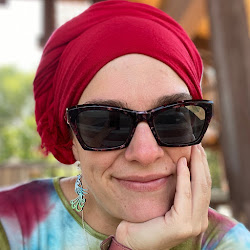
The Hair That's There: You Can Never Go Back

So I know you're all wondering: What gives on the hair-uncovering, Chavi? My most-read posts on this blog are in the vein of hair-covering and mikvah and all things involving shomer negiah, so it must seem weird that I uncovered when we all know that even divorced women are supposed to continue covering their hair, right?

Also, I know that it might come as a shock to some that I uncovered so soon after receiving my get. Around 1 p.m. on September 21, the get was given, and I walked away an unmarried woman according to Jewish law. (I'll write about the ceremony itself, so consider this a "to be continued.") I know of some women who throw off their sheitel or hat or tichel immediately as they walk out of the room, but I couldn't do that. I was still undecided about my uncovering. I got a boost of confidence and support, however, from the rabbi who headed up the beth din (rabbinical court) of the get ceremony. After he shared some very kind words about me (which could go either way for boosting the convert's self-esteem -- ask me if you want to hear the story), I mentioned that I knew Rav Moshe Feinstein's ruling on a divorced woman's hair-covering, but I know that there are leniencies. My query was based on the following:
[Rav Feinstein] is concerned for the divorcĂ©e who needs to get on with her life. In one text, he gives a divorced woman permission to uncover her hair for dating purposes (IM EH 4:32.4). The young woman wants to be able to meet men for matrimonial purposes. She is afraid that a head covering will automatically indicate that she is currently married. Rabbi Feinstein is persuaded that her motive is legitimate and so allows her to remove her head covering. But, he warns, there are conditions. She must inform the man as soon as possible that she is divorced. He will not allow her to mislead a man just to dispel an incorrect first impression so that she might eventually marry. 
The rabbi, impressed with my citation of Rav Feinstein, said, "You're young, you have no kids, you're relocating to a new community, and you want to remarry, yes?" I responded yes to all and he advised to uncover as necessary. 

So here I am, uncovering my hair. It took me a few days, until that following Sunday, actually. After having hacked my hair off a few times during September, I was in need of a serious shape-up haircut. I pulled into Lincoln, Nebraska, checked into my hotel, and went to get a haircut. When I got up that day, I showered and debated whether to cover on the way to the hair-cutting place, but just grabbed a hat and shoved it in my purse -- just in case it didn't feel right. I walked out into the cool Nebraska morning, sun beating down on my freed tresses, and for a split second I felt a freedom, a release, like I was reclaiming my independence, my personality, my happiness. 

But it was fleeting, as all things are. 

I went to the cuttery, showed a picture of my hair from before I got married, and said, "Can we do this, please?" After she was done, I felt that feeling of freedom again. Like, I'm back to the old me! Huzzah! But again, fleeting. I went home to see my family for the first time since May, and I think they were happy to see the hair open and free -- I'm not sure they ever got the whole hair-covering thing to begin with. I toyed with grabbing the hat from my purse and covering up, just to feel a little bit like the married me again, but realized that just as mucha as I couldn't go back to my old haircut, I couldn't go back to covered, married me. 

Who am I? Maybe I just need a new 'do. 

It's funny how much our hair controls our feelings and who we are. It feels horribly wrong, too. It feels shallow and vain. 

So I wake up every day and look in the mirror and let out a huge, heaving sigh because I have to do something with this hair that no longer expresses who I am but that I have anyway. I want to grow it out, to get a cute bob or something, like my dream sheitel, but that's going to take time, and growing hair out when it's been short is a huge pain in the tuches. 

Or maybe I won't grow it. Maybe I'll give up and when winter rolls around go back to my most favorite knit hats that I sported all winter last year, when I was married. I do know several women who were uncovering for months only to start covering again after realizing the same thing I did.

You can never go back. 

G-d willing, I'll get married in the right time and get back to hair covering, a place that I feel is home now. Who woulda thunk it, eh? 

**Most Popular Posts of All-Time in order:

Sunday, March 6, 2011

A Response: Dating During Conversion

I've been pondering a response to Kochava's Why You Shouldn't Date During Conversion blog post, and I think I'm finally in the right mood to write it. In short, I almost completely disagree with just about everything she wrote (but I do adore her, so it's no personal :D).

The long-dating couple before my first beth din meeting in NYC in November 2009.
As you all know, I converted Reform in 2006, many moons before meeting my now husband Tuvia. I started attending an Orthodox shul in Chicago in 2008, many months before meeting Tuvia. I moved to Connecticut, and almost instantly I met Tuvia, who at that time was in a sort of religious oasis -- he'd grown up in a religious community, gone to a Conservative day school for 15 years, been incredibly active in Hillel during college, and after college even attempted to find a Conservative synagogue, but with no luck. When I met him, he was in what I like to think of as an "either way" kind of space. But in one of our first conversations, I told him plain and simple: I'm a Reform convert going Orthodox, and if you're not going in that direction, then let's not waste each other's time. Tuvia was willing to go on the journey with me, and that journey had a lot of challenges, but none that I regret.

I knew about the complications of dating while in-process, but after speaking with a lot of people and doing my own research and soul searching, my conclusion was that you're damned if you do, damned if you don't. I frequently tell those in-process that this is how it works:
If you're dating a Jew while in-process, the community and rabbis will think you're converting for marriage. Some will be okay with that, some won't. If you're not dating anyone while in-process, the rabbis will be highly concerned over how on earth you'll ever land a husband, being a convert and all, and post-conversion will insist on setting you up with other converts (which is fine, but it pigeonholes converts, much like the Jews of Color community, which often gets set up with other Jews of color -- again, fine, but pigeonholed). Catch 22!
Tuvia and I started studying with a rabbi for my Orthodox conversion in January 2009. It's funny how it was all a review for me, but it was largely new to Tuvia, who really enjoyed learning. I struggled for many months with whether Tuvia was doing Orthodoxy for me or for himself, and I didn't want there to be a developed resentment in our relationship where I became the religious zealot of a convert and he became the unwilling participant in a love conquers all situation. (This falls under what Kochava wrote as "if your new partner isn't orthodox but you're in the orthodox conversion process.") We had a lot of discussions about it, and Tuvia assured me that he was doing it because he wanted to -- not for me. And things moved forward. (Although, let's be honest, this still haunts me, and Tuvia knows it.)

Perhaps we were blessed, but our community had zero problems and didn't react negatively at all to our situation. In fact, many people in the community thought that Tuvia was the one going through the conversion process -- not me. The decision to start observing shomer negiah was largely mine, but Tuvia understood the importance and was more than willing to go along with the observance. Was it easy? No, but for us, it was a powerful mitzvah to take on in our journey together. Many in the community were actually impressed/shocked/flabbergasted that a young modern Orthodox couple would even observe shomer negiah, believe it or not. But we held to it, because it was powerful spiritually for us (well, at least me).

We never faced chastisement, and we were upfront and honest with the beth din about everything.

The only major problem that ever came up, in the entire time of our dating and studying and going from community to community and Israel and to the two beth din meetings I had leading up to my Orthodox conversion on January 1, 2010 was the following question, posed by my beth din during the first meeting.
If you knew you were going to convert Orthodox, and you'd decided to do so before moving to Connecticut, why on earth would you join JDate (that big, ugly, non-Orthodox dating service) with the intent of meeting someone? 
Talk about a great question. Mad props to my converting rabbis. This is a great question, and the funny thing is, I really don't have a good reason. I hadn't been on JDate for probably a good two years, back when I was living in Washington D.C. from 2006-2007. But there was this funny feeling I had, especially after my good friend Reuven visited the Lubavitcher rebbe's ohel and davened (prayed) for me to make a shidduch (match) with a nice fellow. I moved to Connecticut mid-August 2008, and I joined JDate almost instantly when I arrived. Within a few days, Tuvia had contacted me, and the rest is history. It just felt right, oddly enough.

When I explained this to the rabbis, they sort of cocked their heads sideways at me. But they understood. If anything, they understood that I'd helped bring one Jew -- Tuvia -- closer to mitzvot and observance through my own actions and passion for Judaism. I think that this, above all else, allowed my beth din to see that I wasn't doing this for marriage, and that if anything, I was bringing a little light into the world through Tuvia. They asked Tuvia, many times, what his background was and how he'd arrived at Orthodoxy, because they also wanted to know that he was truly into Orthodoxy and not just along for the ride with me. But neither of us had a problem with this. (This also falls under what Kochava wrote as "if your new partner isn't orthodox but you're in the orthodox conversion process.")

All this being said, I understand where Kochava is coming from. It doesn't always work out so swimmingly. Plenty of people drop out of the process, plenty of people intermarry when they get fed up with the process, and yes, it happens. But, and I believe this firmly, if you meet someone while you're in-process, and you fall in love, and you know that this person is your one, then the passion that existed before you met that person will shine through, and your beth din will be beyond cognizant of this. It's all about planting your feet firmly and saying, "I am a Jew, I am meant to be a Jew" and your story will tell itself.

Does this work for everyone? No, but I'm not a believer in sacrificing your happiness for an assumed opinion of the institution of Orthodox conversion. Believe it or not, conversion still works on a case-by-case basis (except maybe in California, but in all things, exceptions exist ... it is Judaism after all). To write off your happiness for fear of chastisement by a rabbi or the community just means you're letting yourself be bullied. Be happy, be confident. It can be worth it.

Thursday, June 10, 2010

Modesty, Shomer Negiah, and Me

Photo courtesy of Aunt Patty!

This is a post that could be said even to be outside my comfort zone, and, typically, nothing gets me all "ooo, what will the people say and think!?" So what's the topic that has me a feeling a little squishy?

Shomer negiah. Modesty (tzniut). Not touching your boyfriend, significant other, partner, spouse. Observing ta'arat ha'mishpacha (that's family purity). And all that good, no-touching stuff.

This is probably the most private post I'll ever write, and I'm okay with that because I think that what is known and understood about modesty and shomer negiah is misunderstood. So here I am, hopefully to serve as an example and provide the positive, necessary experience that these aspects of being observant and Jewish can offer for your neshama. Get it? Got it? Good.

I spent my entire teenage and adult life, up until this narrative begins, living as a normal girl with the normal urges and the normal actions. I was a product of secular America and I dated boys, kissed boys, and hugged boys. Then, Tuvia and I met in late August 2008, went on our first date Labor Day 2008, and were knee-deep in a serious relationship shortly thereafter. We were, for all intents and purposes, like every other "normal," American couple out there. We kissed, we hugged, we were in love. We held hands, we gave cozy snuggles. As time went on, however, I started to feel ... uncomfortable. My neshama was not happy with how I was carrying myself as an Orthodox Jewish woman, especially one going through the Orthodox conversion process. Tuvia and I discussed being shomer negiah a dozen times or more, with me spearheading the effort. I needed to be shomer negiah, I needed that modesty.

I needed to not kiss him, or hug him, or touch him.

So we started slow. There was no more physical intimacy and the kisses and hugs grew further and farther apart. Finally, at last, we reached a point where I declared no more. No more kisses, no more hugs, no more hand-holding. Nothing, nada, zilch. The intimacy that would exist, then, was a touch-less, emotional intimacy that had to translate into words. It was difficult at first, but as time wore on, it became life. We understood that it was necessary for our relationship and the success of our relationship in the long-run, to devote ourselves to modesty and thinking forward to family purity via the route of shomer negiah.

Many people assumed that after my official RCA conversion we'd skip out on shomer negiah, that it was just part of an act we put on for the committee of rabbis. It always bothered me that people thought that this aspect of respecting each other and our not being married yet was not who we were, but was just part of an act. It was never an act -- never. In fact, after the conversion, time officially could tick down to the wedding; the countdown made the observance of shomer negiah all the more easy (for me, anyhow).

So the wedding day came, we took pictures, we went to the chuppah, and the we went to the yichud room -- exhausted, tired, sweaty. Everyone assumes that people get down and dirty in the yichud room, but I can't imagine that it's like that for every couple. After all, for many couples, the marriage is quick, they know each other very little, and they've never touched before. If anything, I think the yichud room typically is calm, serene, and romantic.

It's funny how -- even after the several months we spent together kissing and hugging and holding hands -- it was so awkward at first kiss and first hug. It was, without a doubt, like feeling those physical emotions translated into pure emotion for the first time. I often wonder how couples make the wedding day special after having lived and experienced each other in the same way they will as a married couple all along. It seems to me that traditionally, among all cultures, a sense of modesty and separation was the norm for just about forever, up until maybe the past 100-200 years. The way we view and appreciate each other is incredibly key in how we grow to appreciate and view each other in marriage, I think. So why not start in modesty and respect to end in modesty and respect?

The times were tough, they were unbearable at times when my emotions were running rampant in a ridiculous roller coaster ride, and all I wanted was a hug. But I resisted. I knew that my neshama and HaShem were rocking something special, and I was prepared to wait for Tuvia's big arms to be wrapped around me. I can say, firmly, without a doubt that it was all worth it. The stress the months of not touching or kissing or hugging. Because now, I know how to appreciate Tuvia for who he is, how he speaks and thinks and acts, without having to touch him to feel him. It's a powerful feeling to feel so connected to someone without a need for physicality.

Now, I prepare myself for all that will come along with the new steps of modesty and family purity. I cover my hair (which, for me, so far, has been awesome -- I feel a lot more comfortable, I can walk freely in the rain without worrying about messing up my  hair even!), and I will begin going to the mikvah and observing the laws of niddah (you know, those days where Tuvia and I can't touch, again). These days of niddah, in truth, allow a couple to reboot. To relearn to love each other without touch. To talk, to listen, to laugh, and to have no expectation from the other. In my eyes, it's a beautiful, serene thing, issued by HaShem for the sake of shalom bayit (literally, peace in the house!).

Each day, a hat or scarf. Each moment, anew. Each second, my neshama is growing and thriving because of it.

Without these observances of modesty, without creating these lines of peace, I'm not sure how some couples persist. We all need to reboot, we all need to respect and fall in love all over again with our spouses. It's a roadmap to shalom, if you ask me.

How do you do it if you don't have these observances? How does the relationship stay fresh? How do couples not drown under the weight of one another? <--- Those are serious questions, by the way, if any of you want to answer!

I never thought I'd be this person; I never thought I would have been able to go so long without the touch of a man I love, but I did. And I will. Because love is more than touch, it's more than the sensation of feeling -- it's love, emotion, the feelings traversing time and space to create an impression. HaShem has a roadmap for us, and it makes sense to me. Despite never thinking I'd be this person, I am, and I'm so proud to say that without shomer negiah, without modesty, without family purity, I'd be wandering.